
Why Are Your Door Locks Not Working? Common Problems and Solutions
Your Ford's door locking system plays an important role in vehicle security and everyday convenience. Whether you're commuting along Dale Mabry Highway, navigating Tampa traffic, or parking after a trip around the city, you need your doors to lock and unlock reliably.
When a
power door lock stops responding, the problem may be as simple as a depleted
key fob battery or as complex as a fault within the vehicle's electrical
system. Worn actuators, damaged wiring, faulty switches, and mechanical latch
problems can also interfere with normal operation.
The
symptoms often provide useful clues. A single door that refuses to unlock may
point to a different issue than a system in which every door stops responding.
Understanding these differences can help you recognize when your Ford needs
professional service.
Signs Your Ford's Door Locking System Needs
Attention
Door
lock malfunctions do not always involve a complete loss of function. Sometimes,
the system becomes unreliable before a component fails entirely.
Watch
for these common warning signs:
·
Delayed response: Your doors lock or unlock several seconds after you press a button.
·
One door stops working: The remaining doors operate normally, but a particular door does not
respond.
·
Repeated clicking: You hear a motor or clicking noise inside the door without the lock
moving as expected.
·
Intermittent operation: The locks work on some attempts but fail on others.
·
Remote entry failure: Your key fob struggles to operate the locks or works only at a short
distance.
·
A door remains stuck: The lock appears to release, but the door will not open normally.
Pay
attention to which controls still work and whether the problem affects one door
or the entire vehicle. These details can help a technician narrow down the
possible causes.
1. Key Fob Battery Problems or Remote Failure
Before
assuming your Ford has a faulty door lock, check whether the issue originates
with the key fob. A weak battery can reduce the remote's operating range, cause
inconsistent responses, or eventually prevent it from transmitting a usable
signal.
One
helpful clue is whether the interior power lock switches continue to operate
normally. If they work while the remote does not, the key fob battery or remote
entry system may be responsible.
Replacing
the battery with the correct type may resolve the issue. Consult your owner's
manual for model-specific replacement instructions.
If the
remote still fails after a battery replacement, the buttons, internal
circuitry, or vehicle-side remote entry components may require inspection. A
spare programmed key fob, if available, can also help determine whether the
issue is limited to one remote.
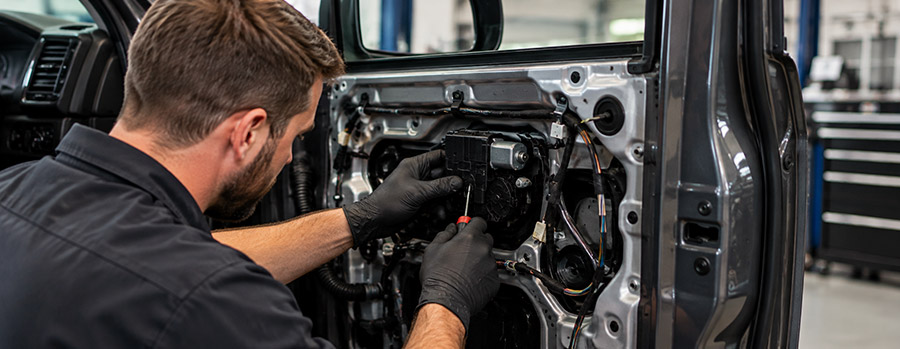
2. A Defective Power Door Lock Actuator
The door
lock actuator is the component responsible for moving the locking mechanism in
response to an electrical command. Repeated use and normal wear can eventually
affect its performance.
When an
actuator begins to fail, you might notice that one door does not lock
completely, refuses to unlock, or responds inconsistently. Clicking, humming,
or buzzing sounds from inside the door can provide another indication of
trouble.
For
instance, if your Ford F-150's driver-side door responds differently from the
other doors, the actuator could be malfunctioning. However, the same symptoms
can occur when a connector is loose, wiring is damaged, or the locking
mechanism is binding.
A
technician can test the actuator and its electrical supply before recommending
a replacement. Confirming the cause first helps prevent unnecessary parts
replacement and ensures the underlying problem is addressed.
3. Broken Wires or Loose Electrical
Connections
Power
door locks depend on a network of wires, connectors, switches, and electronic
components. A damaged wire or poor electrical connection can interrupt the
signals required to operate the locks.
The
wiring harness between a door and the vehicle body is exposed to repeated
bending as the door opens and closes. Over time, individual wires may break
internally, or connectors may develop faults.
Electrical
connection problems can produce several symptoms, including locks that work
intermittently, a door that responds only occasionally, or other electrical
features in the same door becoming unreliable.
Diagnosing
these faults typically involves inspecting connectors, testing circuit
continuity, and checking whether the actuator receives the correct voltage and
control signal.
Replacing
the locking motor alone will not resolve the problem if the actual fault lies
within the wiring.
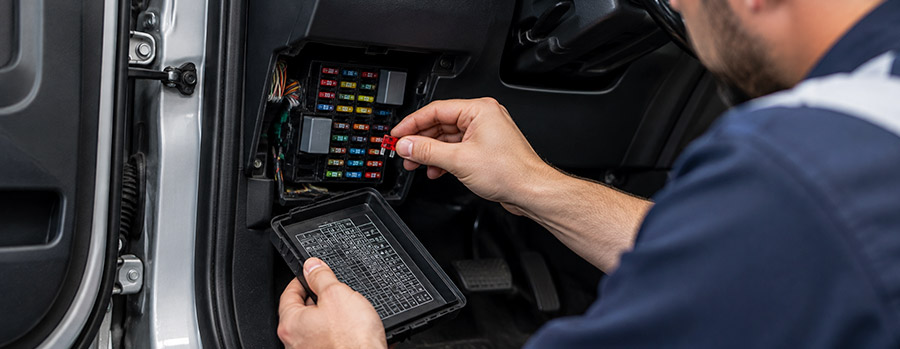
4. Blown Fuses or Power Supply Faults
Your
Ford uses fuses to protect electrical circuits against excessive current. If a
fuse associated with the locking system fails, the affected functions may stop
working.
When
several doors become unresponsive at once, a shared electrical supply, fuse,
control circuit, or electronic component may warrant investigation.
Your
owner's manual provides the appropriate fuse information for your specific
model and year. If a fuse has blown, it should be replaced only with one of the
specified rating.
A
replacement fuse that blows again indicates that an underlying issue may still
be present. For example, a short circuit could be causing excessive current in
the affected circuit. Repeatedly replacing fuses without identifying the cause
will not provide a reliable repair.
Professional
electrical testing can help locate the fault and determine the appropriate next
step.
5. Door Latch or Locking Mechanism Damage
Electrical
components are not always responsible when a Ford door will not open or close
properly. The mechanical parts inside the door can also wear, bind, or become
damaged.
The
latch assembly secures the door when closed, while related linkage and locking
components control how the door releases. If any of these parts malfunction,
the door may remain stuck even when the power lock system appears to operate.
You may
hear the locking mechanism move without being able to open the door.
Alternatively, the door may unlock normally but remain difficult to release
when you pull the handle.
Avoid
forcing a jammed door or repeatedly pulling a resistant handle. Excessive force
can damage the handle, linkage, or surrounding components.
6. Faulty Interior Lock Switch
The
interior power lock switch provides a convenient way to secure or unlock your
Ford without reaching for the key fob. Like other electrical components, it can
develop problems through wear, contamination, or internal failure.
If the
remote operates the locks but the interior switch does not, the switch or its
electrical connections may be the source of the problem.
If both
controls fail to operate the same door, the fault could instead involve the
actuator, wiring, latch, or another part of the locking circuit.
Testing
the locks using the available controls can help narrow down the possibilities.
A technician can then check the switch and associated circuits to determine
whether a repair or replacement is needed.
7. Body Electronics or Remote Entry System
Malfunctions
Modern
Ford vehicles use electronic control systems to coordinate functions such as
power door locks and remote entry. Depending on the vehicle's model, year, and
equipment, these functions may involve body electronics and remote keyless
entry components.
When an
electronic control component develops a fault, the result may be inconsistent
locking commands, several unresponsive doors, or unusual behavior involving
related features.
Because
these symptoms can resemble ordinary actuator, wiring, or power supply
problems, electronic faults should not be assumed without testing.
A
technician may use diagnostic equipment to retrieve trouble codes, examine
relevant circuits, and investigate communication between the components
responsible for locking operation.
Ford Door Lock Troubleshooting Guide
|
What You Notice
|
Possible Cause
|
Recommended Next Step
|
|
Key fob does not work,
but interior switches do
|
Weak battery or faulty
remote
|
Check the key fob battery
and test a spare remote if available
|
|
One door refuses to lock
or unlock
|
Actuator, wiring, or
latch fault
|
Have the affected door
inspected
|
|
Several doors stop
responding
|
Fuse, power supply, or
control system problem
|
Arrange electrical system
diagnosis
|
|
Clicking or buzzing
inside the door
|
Worn actuator or
mechanical obstruction
|
Have the locking
mechanism tested
|
|
Locks work inconsistently
|
Loose connection, damaged
wiring, or faulty switch
|
Note the conditions in
which the problem occurs
|
|
Door unlocks but will not
open
|
Latch, linkage, or handle
mechanism fault
|
Avoid forcing the door
and arrange an inspection
|
These
symptoms are useful starting points rather than definitive diagnoses. If a door
cannot be secured, remains stuck, or behaves unpredictably, arrange an
inspection promptly.
Get Ford Door Lock Service at Bill Currie
Ford in Tampa, FL
A
properly functioning door locking system helps protect your vehicle and keeps
everyday driving convenient. If your Ford's locks have become unreliable,
identifying the source of the malfunction is essential to restoring dependable
operation.
Addressing
the issue early may also help prevent a minor malfunction from developing into
a more disruptive access or security concern. If your door will not open, avoid
forcing it, particularly if it could be unsafe to operate or difficult to
secure.
Schedule Ford service at Bill Currie Ford in Tampa, Florida, to have your door lock concerns evaluated. Our team can help identify the underlying fault and recommend the appropriate repair to get your vehicle's locking system working reliably again.