
Steering Wheel Shaking While Driving? Here’s What It Could Mean
A smooth and steady steering wheel is something you expect every time you get behind the wheel. When you begin feeling a shake or vibration, whether it's happening at highway speeds, during braking, or while driving over rough pavement, it's worth paying attention to the change.
Steering
wheel vibration isn't always the result of a steering system problem. Issues
with tire balance, wheel alignment, tire wear, brakes, suspension components,
or even a damaged wheel can cause similar symptoms.

If your
Ford has started experiencing steering wheel vibration around Tampa, noticing when
the shaking occurs and what conditions make it worse can provide important
clues about its potential cause.
Why Is My Ford Steering Wheel Vibrating?
There
are several reasons you might feel vibration through your Ford's steering
wheel. Something as straightforward as an unbalanced tire and wheel can be
responsible, while other situations may involve the braking system, suspension,
steering components, or drivetrain.
Start by
considering when you notice the vibration. Does it show up at a particular
speed? Is it more obvious when you press the brakes or accelerate? Does it
become noticeable when you drive over bumps?
The
answers can help narrow down the areas that may need inspection.
|
When You Notice the Vibration
|
Possible Cause
|
|
At certain speeds
|
Tire or wheel imbalance,
tire condition
|
|
Primarily while braking
|
Brake components or rotor
issues
|
|
Over bumps or rough roads
|
Suspension or steering
components
|
|
During acceleration
|
Drivetrain or
axle-related issues
|
|
At most speeds
|
Tire, wheel, alignment,
suspension, or steering concerns
|
|
Along with uneven tire
wear
|
Wheel alignment or
suspension problems
|
1. The Tire and Wheel May Need Balancing
An
imbalance between a tire and wheel is one potential reason your Ford's steering
wheel may begin to shake.
The tire
and wheel assembly is designed to rotate smoothly. When its weight isn't
distributed evenly, vibration can become more noticeable as your vehicle
reaches certain speeds. Depending on where the imbalance occurs, you may feel
it through the steering wheel, seat, or floor.
A wheel
can lose a balance weight, while tire wear, a recent tire installation, or an
impact with a pothole or curb can also contribute to the issue.
If your
Ford begins vibrating at particular speeds, having the tire and wheel
assemblies inspected can help determine whether an imbalance is involved.
2. An Alignment Issue Could Be Contributing
Proper
wheel alignment helps your Ford maintain the intended relationship between its
wheels, steering, and the road. Hitting potholes, curbs, or other obstacles can
potentially knock the wheels out of their recommended alignment.
Vibration
may be one symptom, but an alignment issue can also cause your Ford to drift or
pull toward one side. You might notice that the steering wheel sits crooked
while driving or that your tires are wearing unevenly.
Continuing
to drive with poor alignment may accelerate tire wear and affect handling.
If you
noticed the vibration after hitting a pothole or curb, particularly if you also
see uneven tire wear or pulling, an alignment check may be appropriate.
3. Your Tires May Be Damaged or Wearing
Unevenly
Your
tires are constantly exposed to road surfaces, braking forces, steering inputs,
and changing conditions. Over time, these factors can contribute to uneven
tread wear.
Incorrect
tire pressure, alignment problems, suspension wear, improper tire rotation, and
normal tread deterioration can all affect tire condition. A damaged tire can
also produce a noticeable vibration.
Inspect
your tires for visible signs of trouble, including irregular tread wear,
cracks, bulges, or other damage. However, remember that some tire issues aren't
easy to identify without a professional inspection.
If the
steering wheel continues to shake or the vibration is becoming more pronounced,
have the tires and wheels evaluated rather than assuming the problem will go
away.
4. Your Brakes Could Be Causing the Vibration
Pay
attention to whether your steering wheel vibration occurs specifically when
you're braking. If it does, the brake system may be contributing to the
problem.
Brake
components operate under considerable heat and friction. Issues involving
rotors, brake pads, calipers, or other braking components can sometimes cause
vibration that is felt through the steering wheel when slowing down.
The
timing of the vibration matters. A shake that occurs only when applying the
brakes can point toward a different potential issue than a vibration that's
present while maintaining speed.
If you
notice steering wheel shake, brake pedal pulsation, unusual brake sounds, or
changes in braking performance, have the brake system inspected.
5. Suspension Wear May Be Affecting Your Ride
Your
Ford's suspension system is responsible for helping keep the tires in contact
with the road while supporting handling and vehicle stability.
Suspension
components don't last forever. Control arms, bushings, ball joints, shocks, and
struts can wear with mileage and use. Depending on the component affected, you
may notice vibration, unusual noises, uneven tire wear, or changes in how your
Ford handles.
These
symptoms may become more noticeable when driving across potholes, bumps, or
uneven pavement.
Since
multiple suspension components can produce similar symptoms, an inspection can
help identify whether suspension wear is contributing to the vibration.
6. Worn Steering Parts Could Be Involved
Although
steering wheel vibration doesn't automatically point to a steering system
problem, worn steering components can influence the way your Ford feels and
responds on the road.
Depending
on the model, components such as tie rods, steering linkage, and other related
parts may develop wear over time.
Look for
additional signs such as excessive play in the steering wheel, knocking or
clicking sounds, difficulty maintaining a straight path, or changes in steering
response.
If you
notice any of these symptoms along with vibration, have the steering and
suspension systems checked.
7. The Wheel Itself May Be Damaged
Potholes,
curbs, and other road hazards can sometimes cause damage to a wheel. A
sufficiently hard impact may bend the wheel or affect its ability to rotate
properly.
A
damaged wheel can create vibration, particularly at certain speeds. The damage
may not always be obvious when simply looking at the vehicle while it's parked.
If your
Ford began shaking shortly after hitting a pothole or curb, let your service
technician know about the incident. That information can help direct the
inspection toward the wheel and tire assembly.
When Should You Have a Vibrating Steering
Wheel Inspected?
It's
easy to dismiss a mild vibration when your Ford still seems to be operating
normally. However, persistent shaking can indicate an underlying issue that
deserves attention.
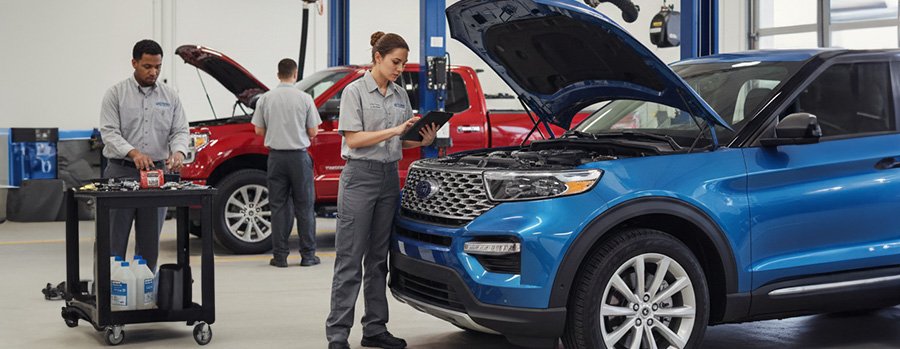
Consider
having your Ford inspected if the vibration occurs along with:
·
Uneven or unusually fast tire wear
·
The vehicle pulling to one side
·
Excessive steering wheel movement or looseness
·
Clicking, grinding, clunking, or other unusual sounds
·
Vibration that increases as speed rises
·
Shaking when applying the brakes
·
Changes in handling or braking
·
A recent impact with a pothole or curb
If the
vibration becomes sudden or severe, especially when accompanied by a noticeable
change in steering or braking, avoid unnecessary driving until the vehicle can
be evaluated.
How Can You Help Prevent Ford Vibration
Issues?
Routine
maintenance can help identify some of the conditions that contribute to
steering wheel vibration before they develop into larger problems.
Maintain
the tire pressure recommended for your Ford, have the tires rotated at the
appropriate intervals, and address alignment concerns when they arise.
Regularly paying attention to tread wear and changes in steering or ride
quality can also help you spot potential issues sooner.
For
model-specific tire pressures, maintenance intervals, and service
recommendations, refer to your Ford owner's manual.
Most
importantly, don't dismiss a new vibration simply because your vehicle remains
drivable. A change in steering feel, handling, braking, or tire wear can be an
early indication that your Ford needs attention.
Get Your Ford's Vibration Checked at Bill
Currie Ford
Steering
wheel vibration can originate from several different areas, including the tires
and wheels, alignment, brakes, suspension, steering components, or wheel
itself.
Because
the same symptom can have multiple causes, determining the source requires a
proper inspection rather than assuming a particular component is at fault.
If your
Ford steering wheel is shaking while driving in Tampa, Town 'n' Country,
Carrollwood, or nearby communities, the team at Bill Currie Ford can inspect
your vehicle and help determine what may be behind the vibration.
Don't ignore a steering wheel that no longer feels right. Schedule service at Bill Currie Ford and have your Ford inspected by our service team.